Rafting, Tubing and the Rivers Behind Cairns: Which Grade Is Actually Yours
7 min read
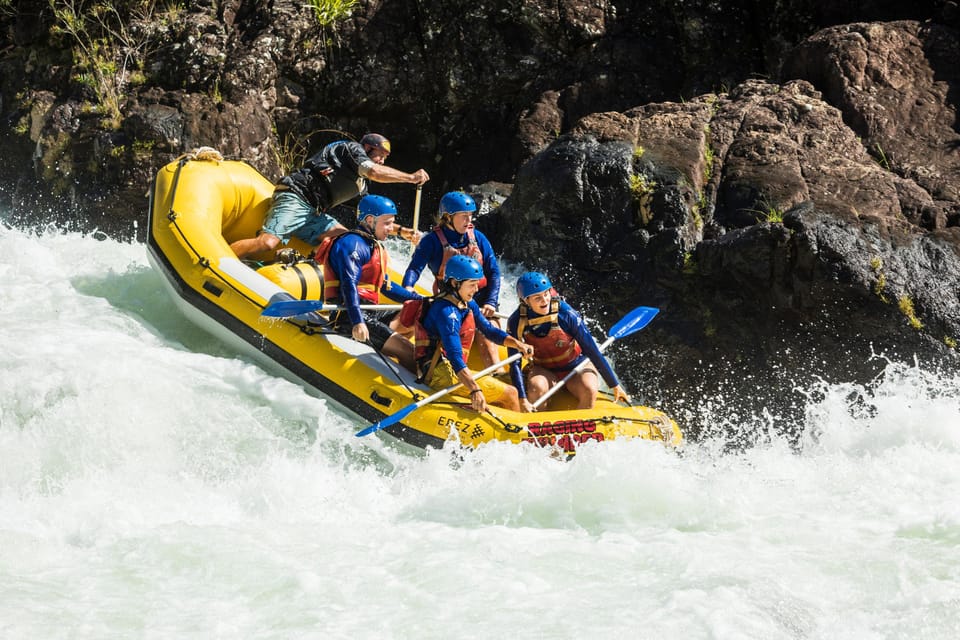
Cairns sells the reef, and then it sells the rivers. Adventure and adrenaline trips make up a long list in Cairns, and many of them happen on moving water in a gorge somewhere behind the city.
They are not the same activity at different prices. Two rivers do most of the work here, and they sit at genuinely different grades, distances and ages. Picking the wrong one is the difference between a good afternoon and a day you spend being brave.
The Barron: grade 2–3, twenty minutes from town
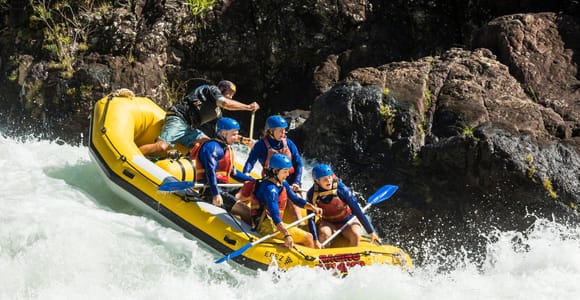
The Barron River runs out of Barron Gorge, the escarpment directly behind Cairns — the same gorge the Kuranda railway climbs. Half-day rafting here is grade 2 to 3, which means real rapids with real water over you and no sections that demand technique.
The practical shape of the day: around 20 minutes’ drive from the city, roughly two hours actually on the river, back for the afternoon. Operators list it from age 12.
This is the one to pick if rafting is something you would like to have done rather than something you have done before, or if you have a half day rather than a whole one.
The Tully: grade 3–4, and it is a drive
The Tully River is the serious option, grade 3 to 4, and it is what experienced rafters come north for. The Tully trip lists children under 13, pregnant women, wheelchair users and non-swimmers as not suitable, and every participant must be able to swim competently and to understand and follow river guide instructions in English — guides assess this at pick-up and can refuse participation, and on a grade 4 river that is not bureaucracy.
The thing that is easy to miss when reading the price: the Tully is not in Cairns. It is roughly two hours south, which is why a full-day Tully trip is a full day even though you are on the water for a few hours of it. The Tully River rafting day is €98.68, listed at 6.5 to 11 hours depending on where you start, with up to three hours on the river, and holds 4.8 stars across 239 reviews. On top of that comes a river levy of A$35 per person, payable on the day; the pub-style dinner after the river is part of the trip, while lunch at the stop in Tully is at your own expense, and shoe hire (A$5 a pair) and souvenir photos (A$59) cost extra. It picks up from Cairns or from Mission Beach — which is closer — if you select that option, or you drive yourself and meet the group at the Golden Gumboot in Tully in time for the 12:55 pm departure.
Why the Tully runs when other rivers are dry
This is the piece of local knowledge that explains the whole industry, and it is not on most booking pages.
The Tully is not a rain-fed river in the way its neighbours are. Its flow is governed by daily releases from the Kareeya hydroelectric station, which has been on this river since the 1950s. That is why northern Queensland can sell grade 4 rafting in October, when the wet season is months away and the rest of the catchment is low.
Two consequences follow, and both are useful:
- Release times move. The station releases according to demand, not to a tour schedule, so operators shift their itinerary to meet the water. Your pick-up time is the operator’s best guess at the river.
- The station takes maintenance outages, and when it does the river is closed for that window — it is not a weather cancellation and it is published well in advance. If your dates are fixed and the Tully is the reason you came, check that window before you book flights, not after.
Tubing and canyoning: the two softer options
Not everyone in a group wants a grade 4 river, and the alternatives here are genuinely different activities rather than watered-down rafting.
River tubing on the Mulgrave River, south of the city, is drifting through rainforest on an inflatable ring with gentle rapids in between. It is the closest thing to a float, and the scenery does the work.
Canyoning at Behana Gorge is the opposite trade — less water speed, more vertical: slides, cliff jumps and an abseil, in a gorge rather than on a river. The operator describes it as suitable for ages 8 to 80 and as running year-round; ages and conditions are set per departure, so take them from the booking page rather than from that sentence.
What to check before you pay
Swimming ability is a requirement, not a preference. The Tully trip requires competent swimming ability and lists non-swimmers as not suitable, and on grade 3–4 water it is the assumption the whole safety briefing rests on. If someone in the group is a weak swimmer, the Tully is not their river; for any other trip, say so at booking rather than at the river.
Ask what happens if the grade changes. After heavy rain a grade 3 section is not a grade 3 section. Good operators cancel or move; the question is whether you get a refund or a credit, and that is on the booking conditions.
Diving has a rule that catches flights. If you are combining a reef dive with a river day and a flight home, note that operators apply a no-fly interval after diving. The exact number is in your dive operator’s conditions, and it is the one rule that can cost you a boarding pass rather than a deposit.
No remedy is named on this page. Motion sickness on a coach, sun on an exposed gorge, insect bites on the walk in — those are worth planning for, and the planning is a conversation with your pharmacy or doctor before you fly, not with a travel page.
Where the rivers fit in a week
If you have a week in Cairns, the rivers are the best answer to the day after the reef. You have already spent nine hours on a boat; the last thing that week needs is another one, and a half day on the Barron gets you back with an afternoon left.
If you have longer, the Tully is worth its drive — but book it as its own day and do not stack it against a rainforest tour or a waterfall circuit in the Tablelands in the same 24 hours. Two long drives in two directions is how people come home tired from a holiday that was mostly a coach seat.